Science fiction writer Ray Bradbury has finally overcome his longstanding
aversion to digital books and authorized an ebook edition of his most famous
novel, FAHRENHEIT 451, which Simon & Schuster released Tuesday. The ebook
deal comes as part of a new publishing agreement brokered by Bradbury's agent
Michael Congdon with S&S that includes all English-language print and
digital formats of FAHRENHEIT 451 in North America, and also includes
English-language mass-market rights in North America to Bradbury's THE MARTIAN
CHRONICLES and THE ILLUSTRATED MAN, both of which will be reissued in March. The
ebook edition of FAHRENHEIT, originally published in 1953, will be priced at
$9.99.
"It's a rare and wonderful opportunity to continue our relationship with this
beloved and canonical author and to bring his work s to new a generation of
readers and in new formats" said publisher Jonathan Karp in the announcement.
"We are honored to be the champion of these classic works." In a telephone
interview, Congdon explained that there was an "opportunity to make a new
license" for the rights to FAHRENHEIT 451 (Ballantine published the original
hardcover edition, while S&S had published the paperback from 1962 onwards)
and there was "no way to make new license with anyone that didn't include ebook
rights."
The agency then approached Bradbury and explained that any new deal involving
the rights to FAHRENHEIT 451 could not go forward without digital rights as part
of the package, and "he was willing to go ahead and sign the contract," Congdon
said.
While Congdon wouldn't comment on specifics, he says the deal was for "a very
significant sum of money." S&S was one of six interested parties who had the
chance to bid on the new rights package, "all of whom had, one way or another,
some relationship with Ray. If there was a way to grant rights to all six
publishers, we would have. But you can't. There's a great deal of admiration for
Ray in the publishing industry, which made our job a lot easier."
Congdon said there may be ebook editions of THE MARTIAN CHRONICLES and THE
ILLUSTRATED MAN, but they are under an existing license with HarperCollins,
which has so far "honored Ray's decision not to have ebook editions." With
FAHRENHEIT's ebook publication, Congdon acknowledged "a door has obviously been
opened" for HarperCollins.
Guru Deepak Chopra has become the highest-profile author yet to sign book deal with Amazon. The self-help author has found yet another key to spiritual enlightenment: become the latest in a string of big name authors to sign a deal for megabucks with Amazon.com.
Amazon has moved aggressively into publishing over the last year, signing major writers including bestselling self-help author Timothy Ferriss and actress and director Penny Marshall – the Marshall deal for $800,000 (£500,000), according to reports – and launching a phalanx of new imprints covering everything from romance to science fiction, each move a further blow to an increasingly nervous community of traditional publishers. This summer it hired former chief executive of the Time Warner Book Group Larry Kirshbaum to run its New York imprint, and Kirshbaum has now clinched a deal for a memoir from Chopra, author of bestselling self-help titles ranging from The Ultimate Happiness Prescription: 7 Keys to Joy and Enlightenment to The Seven Spiritual Laws of Success.
Sold for a sum reported to be higher than $500,000, Chopra and his medical professor brother Sanjiv Chopra's Brotherhood: A Tale of Faith, Big Dreams and the Power of Persistence will tell how the pair arrived in the US in the 70s with no money, looking at how they fulfilled their dreams today. Literary agent Robert Gottlieb, who negotiated the deal, called it "a game-changer for the publishing industry". The Guardian
Who in the world could possibly imagine writing 26 books in 3-½ years? That's what James Patterson and his team of coauthors will be producing for Little, Brown. The publisher recently announced that James and his writers will create 13 adult novels and 13 children's books that will be released through 2014. So if you're struggling to get your first or next book done, just ask yourself, how would James Patterson do it? Maybe you'll get a fresh idea or two. (Like paying several hundred thousand dollars in return for earning several million?)
by Michielle DJ Beck Reviewed by Don Bacue, Executive Editor
International Features Syndicate
Following a foreword by Marcus A. Lindemann putting codependency and relationship addiction into perspective, the book, Sorry, I Thought I Loved You, delves into the lives of a woman by the name of Michielle DJ Beck. I say “lives” because, although married for the first time at the age of 17 and divorced for the fifth time at 34, she experienced different aspects, different generations, of codependency with each of her husbands. In fact, one of few things she seems to have had in common with them was her realization that something was wrong.
Not that she could put her finger on it, of course. She was nowhere near that far enough along in understanding her obsession with relationships. But she knew that she was different, that she didn’t fit in the way others did. That, of course, merely made her increasingly despondent and racked with guilt. What was she doing wrong? Why wasshe failing her spouses? Or, more realistically, why were they all failing her? In between her five marriages, she suffered similar fates with countless other relationships that never reached the altar.
But where did it all begin? And how did Michielle finally claw her way to emotional freedom?
“It all started early,” Beck writes, “ – as early as I can remember – and it only got worse as I got older. Finally, after many long and confusing years I stumbled, completely by accident, onto a path of research and self-discovery, and today I can finally put a name to the main problem that has tormented me since my earliest memories: I am a codependent relationship addict.”
After reading everything she could find on the subject and talking with professionals in the field, she knew she had a hard, long road to recovery ahead of her. The guilt and shame she felt for not having taking action sooner proved to be a menacing roadblock along the way. So, too, did her fear of sharing her new self-discovery with others. In time, though, she came to a universal realization about codependency addicts.
“They only know that they are unhappy," she writes, "and they think a relationship of some type will make them happy again. When it doesn't, they are lost. They think: ‘Well, I guess I just need a different relationship. That must be what's wrong!’ So they leave their relationship, and they go and find another one, only to repeat the same pattern – a pattern which I finally succeeded in breaking, but only after many years, much effort, and a totally unexpected and unsolicited epiphany, which I promise I'll share with you in a later chapter.”
Obviously, Beck went on to break the chain of addiction, but the legacy of dependency lives on. In fact, after reading her fascinating and hope-inducing work on her life’s struggle to regain a sense of normalcy, I realized that I once shared her addiction. Several broken relationships and failed marriages later led me to my own painful epiphany: I had to change what was broken inside me before I could ever find true happiness with someone else.
How much easier it would have been if, 25 years ago, I’d had Sorry, I Thought I Loved You to guide me through my own tribulations. And just how many other people are there who could benefit from this inspirational and eye-opening tale?
Take my word for it, this is a five-star read from start to finish. Complete with chapter-ending “What the Therapist Says” interpretations and suggestions to put into use PLUS a very impressive “Resources” section. Pick up a copy today. And change your life around for good.
A Fantastic Journey, by William James "Dare to dream..."
Review of They Call Me Doc: The Story Behind the Legend of John Henry Holliday (Paperback) ***** 5.0 out of 5 stars
As an author, I am intrigued with the writing skills set into this book. D. J. Herda has created a wonderful journey into the historical past to bring the character of Doc Holiday to life. This is good... no, this is a great work.
A Masterpiece of U.S. Western Culture, by Gabriela Sbarcea
Review of They Call Me Doc: The Story Behind the Legend of John Henry Holliday (Paperback) ***** 5.0 out of 5 stars
"You see when a man loses his woman to another man, it is a serious matter. When a man loses his horse to another man, it is unforgivable. But when a man loses his gun to another man, it is inconceivable."
D. J. Herda , in They Call Me DOC, revives the Wild, Wild West through one of its most famous gunfighters, gamblers, and prominent figures, John Henry Holliday, also known as DOC. His voice is alive, vivid, to the point where you think he is sitting in front of you at a table in the dusty old Coral, giving you an account of his entire life over a glass of whiskey. You laugh and cry with him and want the story to go on forever.
This is the very first book written since Gone With The Wind that enticed me to learn more about a highly controversial time, place, and people in U.S. history, where the conflict between North and South lynched mercilessly many innocent lives and divided a nation. Those were the times that nurtured John Henry Holliday, the young man who overcame gruesome health and circumstantial obstacles to become a dentist and use his agile mind in many more ways than one. The southwestern mentality and take on life are powerful and well grounded in the fundamental principle that when the law fails to provide justice, the man steps forth. "The code of the West took precedence over the laws of mere mortals. We had `right' on our side."
But Western justice, guns, and gambling are not entertaining without a "darling whore." Kate, Doc Holliday's love, is a woman of substance, a fact that proudly defies the hazardous prejudice attached to one of the oldest occupations in human history, prostitution. There is so much more to this woman than the legend portrays, and D. J. Herda, I mean the DOC, does her "right" by telling us the truth, the formidable nuances of her life and his, that no other source has ever managed to provide to us before.
Oh, by God, I wish the DOC had lived longer! Happy reading!
And from Salon magazine, a reader e-mailed:
I just finished reading your book "They call me Doc" and I just wanted to thank you for writing the best book probably ever written about this great misunderstood man. I love the way you wrote it. It was as if Doc was talking to me through the whole book. I posted it on my facebook page also because everyone that is interested in the history of the old west needs to read it. John Henry Holliday was a good man that was forced into the life that he lived and you brought that out really well. Thanks again for writing this great book.
On December 10, 1905, screenwriter and novelist Dalton Trumbo was born to a family living in Montrose, Colorado. His father, Orus Bonham Trumbo, soon after moved the family to Grand Junction. There, in the blue-collar town a stone's throw from neighboring Utah, the elder Trumbo worked at several occupations--from shoe salesman to beekeeper--all without much success.
When young Trumbo entered high school, he began writing for the Daily Sentinel, the local newspaper. He entered the University of Colorado in 1924, but when his father died the following year, he moved to Los Angeles to help support his mother and two younger sisters. He worked for nine years on the night shift at a bakery, leading him to observe, "I never considered the working class anything other than something to get out of."
While working evenings, Trumbo also enrolled in classes at the University of California and at the University of Southern California. His first stories and essays appeared in Vanity Fair, and in 1932, he began contributing to the film magazine, the Hollywood Spectator. Trumbo left the bakery business for good when the magazine offered him a position as managing editor.
Trumbo's debut as a novelist came with the publication of Eclipse in 1935. It was a satire in the spirit of Sinclair Lewis's Babbitt (1922) about a self-made businessman, John Abbott, who challenged a backward and introverted society. The work was a thinly veiled satire of life in Grand Junction as Trumbo saw it. That same year, he was hired as a reader and a screenwriter by Warner Brothers, and his star was on the rise.
Trumbo wrote 21 screenplays in the next six years, many of them low-budget remakes for the B-picture units at Warner Brothers, Columbia, and RKO. Trumbo's adaptation of Christopher Morley's novel, Kitty Foyle, a story about a working girl and her troubled love life, won an Oscar nomination.
Despite his success as a screenwriter, Trumbo was determined to become a first-rate novelist. The inspiration for his anti-war epic, Johnny Got His Gun, came after he'd read an article about a British officer who had been gravely disfigured in World War I. The story covers the thoughts of a soldier who has lost his arms, legs, face, sight, and hearing and decides to become an educational exhibit about the horrors of war. He believes that the people who come to see him "would learn all there was to know about war. That would be a great thing, to concentrate war in one stump of a body and to show it to people so they could see the difference between a war that's in newspaper headlines and liberty loan drives and a war that is fought out lonesomely in the mud somewhere, a war between a man and a high explosive shell."
Trumbo made his debut as a film director when he later turned the story into a movie. It won several awards at Cannes but did poorly at the box office in the U.S.
In 1938, Trumbo married Cleo Fincher. They bought a ranch, named the Lazy T, at Lockwood Valley, a short drive from Hollywood. During World War II, he served as a war correspondent with the U.S. Army Air Force. In his script, Thirty Seconds over Tokyo, starring Spencer Tracy (1944), he managed to tell a lavish story without the racist tones so prevalent in the day.
Trumbo joined the Communist party in 1943. He said the meetings were "dull beyond description, about as revolutionary in purpose as Wednesday-evening testimonial services in the Christian Science Church." Nonetheless, his experimentation in social awareness eventually cost him dearly. In 1947, he was summoned before Joseph McCarthy's House UnAmerican Activities Committee (HUAC) to answer questions about the pervasiveness of communism in Hollywood. He refused to cooperate and was cited for contempt of Congress. He was convicted of the charge and, as a member of the "Hollywood Ten," spent nearly a year in a federal prison in Kentucky. Afterwards, he sold his ranch and moved to Mexico, where he continued to write scripts under various pseudonyms.
Ian McLellan Hunter said that Trumbo wrote the original story for William Wyler's film, Roman Holiday (1953), starring Audrey Hepburn and Gregory Peck. "He asked me to front for him," Hunter later said. Hunter received an Academy Award for the story and turned his fee from Paramount over to Trumbo.
This blacklisting is going to collapse because it is rotten, immoral and illegal. I am one day going to be working openly in the motion picture industry. When that day comes, I swear to you that I will never sign a term contract with any major studio. I will, proudly and by preference do at least one picture a year for King Brothers, and I will try to make it the best picture that I have it in me to do." - from Trumbo's letter to the King Brothers, in The Penguin Book of Hollywood, ed. by Christopher Sylvester, 1998
With the help of director Otto Preminger, Trumbo broke off the blacklist in 1959 and was hired to write the screenplay for Exodus, based on Leon Uris's bestseller. More screenwriting credits came with The Sandpiper, perhaps better remembered for its song The Shadow of Your Smile than for its stars, Elizabeth Taylor and Richard Burton. Another Trumbo film, Hawaii (1966), was based on James Michener´sbest-selling novel.
In a 1970 speech to the Screenwriters Guild, Trumbo reflected upon the horrible years of the House UnAmerican Activities Committee investigations and of Hollywood blacklisting.
"The blacklist was a time of evil, and that no one on either side who survived it came through untouched by evil. Caught in a situation that had passed beyond the control of mere individuals, each person reacted as his nature, his needs, his convictions, and his particular circumstances compelled him to. There was bad faith and good, honesty and dishonesty, courage and cowardice, selflessness and opportunism, wisdom and stupidity, good and bad on both sides.
"When you who are in your forties or younger look back with curiosity on that dark time, as I think occasionally you should, it will do no good to search for villains or heroes or saints or devils because there were none; there were only victims. Some suffered less than others, some grew and some diminished, but in the final tally we were all victims because almost without exception each of us felt compelled to say things he did not want to say, to do things that he did not want to do, to deliver and receive wounds he truly did not want to exchange. That is why none of us - right, left, or centre - emerged from that long nightmare without sin."
The tumultuous life of Dalton Trumbo came to an end on September 10, 1976, when he died of a heart attack.
November 8, 1900, marks the birthday of a woman whose own life reads nearly as dramatically as her most famous book. Margaret Mitchell, a native of Atlanta, wrote Gone with the Wind, a book that was very nearly never published but, in fact, ended up winning the Pulitzer Prize for the author in 1937.
Mitchell's mother was a suffragist. Her father was a prominent southern lawyer and president of the Atlanta Historical Society. She grew up listening to stories about the Old South and the battles that the Confederate Army had fought around Atlanta during the Civil War. As she grew older, she loved being the center of attention. She said, "If I were a boy, I would try for West Point, if I could make it; or, well, I'd be a prize fighter — anything for the thrills."
After being graduated from Washington Seminary, Mitchell studied medicine at Smith College. She adopted her mother's feminist leanings, clashing frequently with her father's conservatism. But she lived the Jazz Age in full and reported on it in her article, "Dancers Now Drown Out Even the Cowbell" in the Atlanta Journal Sunday Magazine.
"In vain," she wrote, "the leader of the jazz band may burst blood vessels in his efforts to make himself heard above the din of the Double Shuffle and the Fandango Stomp, the newest dances introduced to Atlanta's younger set. Formerly we had a vast respect for the amount of noise a jazz band could produce. Now we see it is utterly eclipsed."
Mitchell had numerous suitors when she was young. She fell in love with a man who went to fight in World War I and never returned. When Mitchell's mother died in 1919, Margaret returned to keep house for her father and brother. In 1922, she married Berrien Kinnard Upshaw, who turned out to be a cruel husband with a violent temper. The disastrous relationship was climaxed by spousal rape and was finally annulled in 1924.
Mitchell began her writing career as a journalist in 1922. Using the pseudonym, Peggy, she wrote whatever she thought her Atlanta Journal readers would enjoy--articles, interviews, sketches, and book reviews about beauty pageants, summer getaways, hospitals, prison cells, and whatever else that crossed her mind. She also contributed to a popular gossip column called "Elizabeth Bennett."
Mitchell remarried in 1926, shortly before developing a stabbing pain in her ankle. She couldn't walk, so she took a leave of absence from the paper and holed up in her apartment. She passed the time reading books. After reading everything she could get her hands on, she decided to write a book, herself. She wrote Gone With the Wind, beginning with the last chapter and working her way back in time. The book tells the tale of Scarlett O'Hara, an aristocratic woman born on a plantation into the genteel life. By the end of the war, she loses everything she owns.
"Scarlett O'Hara was not beautiful, but men seldom realized it when caught by her charm as the Tarleton twins were. In her face were too sharply blended the delicate features of her mother, a Coast aristocrat of French descent, and the heavy ones of her florid Irish father. But it was an arresting face, pointed of chin, square of jaw. Her eyes were pale green without a touch of hazel, starred with bristly black lashes and slightly tilted at the ends. Above them, her thick black brows slanted upward, cutting a startling oblique line in her magnolia-white skin - that skin so prized by Southern women and so carefully guarded with bonnets, veils and mittens against hot Georgia sun." - from Gone with the Wind
At the end of the book, Scarlett pleads with the man she loves, Rhett Butler, who tells her that he is leaving her. She tells him that she doesn't know what she'll do if he goes away, to which he responds with one of literature's most celebrated lines, "Frankly, my dear, I don't give a damn."
Mitchell wrote the book on a sewing table and stuffed each section into a large Manilla envelope. She wouldn't admit to anyone that she was writing it. She said, "I fought violently against letting even a close friend read as much as a line." If someone walked into the room, she would throw a bath towel over her typewriter.
It took Mitchell nine years to complete her book. In 1935, editor Harold Latham visited Atlanta. When she met him, he said that he had heard she'd written a novel. She felt shy and told him that he was mistaken. Soon afterward, a friend told her, "I wouldn't take you for the type who would write a successful book. You know you don't take life seriously enough to be a novelist ... I think you are wasting your time trying."
She was so furious with the comment that she went home and grabbed the manuscript. She ran back to Latham's hotel and caught him just as he was packing for a train back to New York. Latham liked it, and the book was published by MacMillan in 1936. Comparable in length to Tolstoy's War and Peace, it ran over a thousand pages in length and sold millions of copies. It broke all previous sales records. TheNew Yorker praised it, and poet and critic John Crowe Ransom admired "the architectural persistence behind the big work" although he criticized it for being overly Southern, particularly in its treatment of Reconstruction.
Malcolm Cowley's disdain in his review came partly from the book's popularity. John Peale Bishop dismissed the novel as merely "one more of those 1,000 page novels, competent but neither very good nor very sound." Regardless, in 1937, Gone with the Wind was awarded the Pulitzer Prize. And in 1939, the movie adaptation appeared, starring Clark Gable and Vivien Leigh. It won 10 Academy Awards, including one for Best Picture.
Margaret Mitchell died in Atlanta on August 16, 1949, after being struck accidentally by a speeding car while crossing Peachtree Street. Lost Laysen, a lost novella by Mitchell written when she was 16 and given to her close friend, was published posthumously in 1995. The romance was set on a South Pacific island.
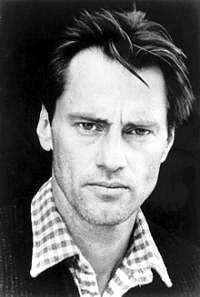
November 5, 1943, marks the birthday of enigmatic actor and playwright Sam Shepard. Born Samuel Shepard Rogers VII in Fort Sheridan, Illinois, he was the son of an Air Force career man who had been a bomber pilot in World War II. After the war, Rogers moved his family around between various army bases until he decided to retire and try his hand at ranching. The family raised sheep and grew avocados on their property in Duarte, California, where Shepard watched his father's slow, methodical decline into alcoholism.
Shepard entered San Antonio Junior College, where he intended to study agriculture. But fate intervened when, a year later, he joined a touring troupe of Nomadic thespians. "That was one of the most exciting times of my life..." he said. "We never spent more than one or two nights in the same place, and our stages were always the altars of churches... We crisscrossed New England, up into Maine and Vermont. The country amazed me, having come from a place that was brown and hot and covered with Taco stands. Finally we hit New York City and I couldn't believe it. I'd always thought of the 'big city' as Pasadena and the Rose Parade. I was mesmerized by this place."
He was mesmerized, as well, by the stage. At the age of 19, he supported himself by serving tables at the Village Gate while pursuing his theatrical interests. His first complete play, the autobiographical Cowboys, received a favorable review in The Village Voice. The bug had bitten. Hard.
Shepard gradually built his theatrical reputation upon a series of one act-plays produced in off-off-Broadway theatres. He worked at experimental spots like La Mama, Cafe Cino, the Open Theatre, the American Place Theatre, or any company he could find that would produce his work. He shared an apartment with the son of jazz legend Charles Mingus, who once remarked that, whenever Shepard wasn't reading Samuel Beckett or working, he would go into his room with a ream of paper, close the door, and emerge some time later with the same box of paper, holding a new play.
In 1971, Shepard told an interviewer, "I don't want to be a playwright, I want to be a rock and roll star..." Regardless, by the time he turned thirty, he had more than 30 New York productions to his credit.
Shepard's early plays were innovative, influenced by early experiments as a rock musician. His settings are often a type of No Man's Land on the American horizon, his characters, typically loners and drifters caught between a mythical past and the technological present. His works often explore the relationships within deeply troubled families. In 1979, his Buried Child, dealing with the deterioration of the traditional American family, won the Pulitzer Prize.
In 1983, Shepard divorced his wife and began a relationship with actress-producer Jessica Lange. Two years later, he adapted his play, Fool for Love, into a script and starred in the film with Kim Basinger and Randy Quaid. Shepard's A Lie of the Mind (1986), a poetic look at the American West, won the New York Drama Critics Circle Award. That same year, he was elected to the American Academy of Arts and Letters. Among his works from the 1990s are Simpatico (1994), which he started to write while he was driving to Los Angeles, and Cruising Paradise (1996), which contains 40 short stories exploring the themes of solitude and loss of angry and anguished men.
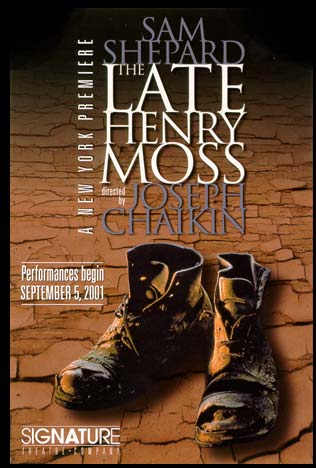
After a hiatus of 20 years, Shepard directed his play, The Late Henry Moss (2000) in San Francisco at the Magic Theatre. It starred Nick Nolte, Sean Penn, and James Gammon. The play is about the conflict between two brothers and their dead father. Since then, Shepard has gone on to become the most widely produced American playwright in history. His latest play, God of Hell, came out in 2004.
Sam Shepard said, "The work never gets easier. It gets harder and more provocative. And as it gets harder you are continually reminded there is more to accomplish. It's like digging for gold. And when you find the vein, you know there's a lot more where that came from."
Remember that mysterious, unpublished, unconfirmed manuscript of the fourth book in Stieg Larsson’s best-selling “Millennium” series? It’s actually the fifth book, according to an article in the New York Times. So said Larsson’s brother, Joakim, in an interview on CBS that was broadcast on Sunday, Oct. 10.
The author, Stieg Larsson, died in 2004 before his books were published.
“I got an e-mail from Stieg 10 days before he died, where he said that book four is nearly finished,” Joakim Larsson said in the interview, which also included his father, Erland.
“To make it more complicated, this book No. 4 — that’s book No. 5,” he added. “Because he thought that was more fun to write.”
The disclosure — should it be true — adds another turn to an already twisty personal story that is nearly as complicated as the plots of the Swedish crime mysteries that Larsson wrote.
The first three books of the “Millennium” series, beginning with “The Girl With the Dragon Tattoo,” and ending with “The Girl Who Kicked the Hornet’s Nest,” have become a publishing phenomenon, with tens of millions of copies in print. Larsson did not live to see the books published; he died of a heart attack in 2004, at the age of 50.
The author had said he intended the series to consist of 10 books, and he was working on a manuscript when he died.
Under Swedish law, control of his estate went to his family, rather than to Eva Gabrielsson, his longtime companion. Gabrielsson, who is reportedly in possession of a laptop containing the manuscript, declined to comment to CBS.
Paul Bogaards, a spokesman for Knopf, the American publisher of the “Millennium” books, said he believed the unpublished manuscript existed but did not know whether it was intended to be the fourth book or the fifth.
Whether it will ever be published is another question. Depending on the plot and substance of the story, it is possible that it could work as the fourth book in the series, even if it had been intended to be the fifth.
According to CBS, the Larssons said they would not allow the book to be published.
Andrew Marr's latest book is, literally, stopping traffic. Boxes containing 15 British tons (16.8 U.S. tons) worth of the journalist's history volume, The Making of Modern Britain, have been strewn across a busy English road following a recent accident. Thames Valley Police said on Sept. 29 that a truck carrying books overturned approximately 40 miles (65 kilometers) west of London shortly before midnight the night before. The driver suffered cuts to his arms, and the road was closed throughout the night as the books were cleared away.
Video footage on the BBC website showed smashed-open boxes of the book piled by the roadside. The Making of Modern Britain is described by its publisher as "a fascinating portrait of life in Britain during the first half of the 20th century." Marr, a BBC reporter and presenter, apologized to anyone who had been inconvenienced, and said he hoped the book was not "being taken off to be pulped."
From Our "Does It Get Any Weirder than This?" Department
Washington (CNN) -- The Department of Defense recently purchased and destroyed thousands of copies of an Army Reserve officer's memoir in an effort to safeguard state secrets, a spokeswoman for Obama's White House said Sept. 25.
"DoD decided to purchase copies of the first printing because they [sic] contained information which could cause damage to national security," Pentagon spokeswoman Lt. Col. April Cunningham said.
In a statement to CNN, Cunningham said defense officials observed the September 20 destruction of about 9,500 copies of Army Reserve Lt. Col. Anthony Shaffer's new memoir, "Operation Dark Heart." The cost to taxpayers for the action is estimated at nearly $50,000.
Shaffer says he was notified the day before about the Pentagon's purchase.
"The whole premise smacks of retaliation," Shaffer told CNN following White House admissions. "Someone buying 10,000 books to suppress a story in this digital age is ludicrous." Even more so, apparently, when an unknown and unspecified number of digital copies are still circulating as eBooks.
"I followed my instructions from the Department of the Army to the letter," Shaffer said. "I even warned DOD that their destruction of these books would only create more demand and increase readership."
Shaffer's publisher, St. Martin's Press, released a second printing of the book that it said had incorporated some changes the government had sought "while redacting other text he (Shaffer) was told was classified."
From single words and names to entire paragraphs--"Even hyphens in hyphenated words," Shaffer said--blacked out lines appear throughout the book's 299 pages.
CNN obtained a memo from the Defense Intelligence Agency dated August 6 in which Lt. Gen. Ronald Burgess claims the DIA tried for nearly two months to get a copy of the manuscript. Burgess said the DIA's investigation "identified significant classified information, the release of which I have determined could reasonably be expected to cause serious damage to national security."
Burgess said the manuscript contained secret activities of the U.S. Special Operations Command, CIA, and National Security Agency.
Shaffer's lawyer, Mark Zaid, said earlier this month that the book had been reviewed by Shaffer's military superiors prior to publication.
"There was a green light from the Army Reserve Command," Zaid told CNN.
But intelligence agencies apparently raised objections when they received copies of the book. CNN
Mark your calendars. On Tuesday, the economic downturn ends.
Why? you ask. That's when self-help priestess Rhonda Byrne returns with The Power and a novel solution to everyone's money woes.
It's not a faltering economy or Wall Street that are at fault, according to the author. It's our feelings. "It's the attractive force of love that moves all the money in the world, and whoever is giving love by feeling good is a magnet for money," Byrne writes.
So stop worrying about that foreclosure notice or the 29% interest rate on your credit card and perk up, people! "You can tell how you feel about money, because if you don't have all you need, then you don't feel good about money," she writes.
But before you snicker and Google that P.T. Barnum quote about suckers, remember that Byrne's previous opus, 2006's The Secret, sold more than 19 million copies in 46 languages. Oprah Winfrey, among others, embraced the Australian TV producer's revelations about the "law of attraction." Boiled down, the idea is to open yourself up to life's goodies — big house, wonderful relationships, fabulous health, all-round happiness — and you'll get them.
The weirdest thing, according to USA Today, is that the author may actually believe herself. Her own narrative is pretty startling. A struggling mom of two reads Wallace Wattles' 1910 book The Science of Getting Rich and ends up as an enormously wealthy media superstar, thanks to her Secret DVD and books.
Her latest tome advises people to be positive and upbeat, believe in themselves, remain open to life's possibilities, and be grateful. Then add the magic ingredient: love.
The problem isn't the self-help genre, the reviewer argues, it's applying the law of attraction to your checkbook. "Byrne is no Suze Orman.
"Another creepy element is the way Byrne digs into the world's religions to pluck out quotes bolstering her crackpot theories about finance. Mother Teresa and St. Augustine are quoted in the money chapter. Quotes from 'Jesus, founder of Christianity,' pop up amid gems such as 'dollar bills want you.'
"With The Secret, Byrne made a fortune off the delusional bliss of magical thinking. Let's not give her any more power."
From our "Never Say Never" Department comes news that an 82-year-old woman is celebrating a book deal for her debut novel. Teacher, theatre director, and grandmother Myrrha Stanford-Smith, who lives in Holyhead, north Wales, said she was "gobsmacked" to be handed the three-book agreement, which saw her first work The Great Lie appearing in bookshops last week.
Stanford-Smith, a trained actor, has always had a passion for creative writing. After receiving positive feedback on a short children's story she sent in to BBC Radio Wales last summer, she secured a deal with publisher Honno for a trilogy based around her swashbuckling Elizabethan hero, Nick Talbot.
The adventure reignites, in fictional form, the rivalry between William Shakespeare and Christopher Marlowe. The book's 16-year-old Nick, the son of the late first Earl of Rokesby, runs away with a troupe of traveling players who take him to London where he soon comes to Marlowe's attention.
Stanford-Smith said of the deal, "I was gobsmacked. I had to put the phone down and ring them back as I was so taken aback by the whole thing. I had to pull myself together before I could even pick up the phone to call back.
"It was out of the blue. I'd been waiting for the manuscript to be sent back, really, rejected. It was such a wonderful surprise."
Born in Brighton and trained at the Guildhall School of Music and Drama before working with theatre director and impresario Sir Tyrone Guthrie in the West End, the author later moved into teaching and directing.
"It was so lovely to have the book in my hand with embossed cover," she said. "I read it again just for pleasure – to have my book, my words, in my hand as my very own book, it was wonderful. It's on the bookshelves now next to my favourite authors in pride of place with a gap for the next two in the trilogy."
After retiring to Anglesey in the 1990s, Stanford-Smith realized a life-long dream by founding Ucheldre Repertory Company. She still works with the company as both a director and teacher and is currently directing a production of Richard III for production this autumn.
A "restrained, sparely written" debut novel by a Dutch author and part-time gardener has beaten Marilynne Robinson's Orange prize-winning Home and Joseph O'Neill's Booker-longlisted Netherland to win the world's richest prize for a single literary work, the International Impac Dublin literary award.
Gerbrand Bakker's The Twin, in which protagonist Helmer is forced to return to his family's small farm in the bleak Dutch countryside after his twin brother dies in a car accident, was named winner of the €100,000 Impac prize in Dublin recently. The award is unique in that public libraries around the world nominate titles they think should win. The Twin was proposed by libraries in Amsterdam, The Hague, Utrecht, and Eindhoven, after which an international judging panel selected the winner, this year from a shortlist of eight.
In Dublin to receive his prize, Bakker said he "had to lie down for a while" after hearing that he'd won the award. "It's wonderful," he said. "But for me it was also wonderful to read the book in English. I said to David [Colmer] the translator: 'Who wrote this book?' I didn't recognize it, I thought it was very good. It made me realize it really is a book, and I am a writer." The award money will be divided between Bakker and Colmer.
Acclaimed English author Anne Fine sat on this year's judging panel, which commented that the book "convinces from first page to last.
"Though rich in detail, it's a sparely written story, with the narrator's odd small cruelties, laconic humor, and surprising tendernesses emerging through a steady, well-paced, unaffected style," said the judges. "With quiet mastery the story draws in the reader. The writing is wonderful: restrained and clear, and studded with detail of farm rhythms in the cold, damp Dutch countryside."
The Twin is the third debut novel in a row to win the Impac, following Michael Thomas's Man Gone Down last year, and Rawi Hage's De Niro's Game in 2008. The idea for the book came to Bakker on a holiday in Corsica in 2002. Hiking through the mountains, he had the idea of a son "who was going to do something terrible to his father."
Bakker became a licensed gardener in 2006 and also works during the winter as a skating instructor, but says that these days he makes enough money to be a full-time writer, although he doubts that he'll ever give up gardening. "In the autumn when I rake the dead leaves I can do it for hours – once I even disturbed a pile I'd made so I could go on raking. The sound is so wonderful: it lets you think in a subconscious way, in the back of your mind."
The International Impac Dublin literary award is organized by Dublin city libraries, and is open to novels written in any language, provided they have been published in English. This year 156 titles from 43 countries were put forward by 163 public libraries.


 Posts
Posts







 "When you who are in your forties or younger look back with curiosity on that dark time, as I think occasionally you should, it will do no good to search for villains or heroes or saints or devils because there were none; there were only victims. Some suffered less than others, some grew and some diminished, but in the final tally we were all victims because almost without exception each of us felt compelled to say things he did not want to say, to do things that he did not want to do, to deliver and receive wounds he truly did not want to exchange. That is why none of us - right, left, or centre - emerged from that long nightmare without sin."