It's not often that a member of academia breaks out of his field to become a best-selling author, but it happened just that way for Daniel J. Boorstin. He was born in Atlanta, Georgia, on October 1, 1914. Raised in Oklahoma, he was graduated with honors from Harvard, studied at Balliol College, Oxford, as a Rhodes Scholar, and earned his PhD at Yale.
Boorstin taught for years at the University of Chicago, and he has held many teaching positions abroad with stints at the University of Rome, the University of Geneva, Trinity College, Cambridge, and the Sorbonne. He was also the twelfth Librarian of Congress.
When President Gerald Ford nominated Boorstin to the position in 1975, the Authors League of America supported him, although the American Library Association objected because he "was not a library administrator." The Senate confirmed the nomination without debate.
During his term as Librarian of Congress, Boorstin established the Center for the Book to encourage reading and literacy. He also spearheaded what became a 10-year project to completely renovate the Thomas Jefferson Building of the Library of Congress, restoring the main building to its original 1897 condition. After retiring in 1987, he was named Librarian of Congress Emeritus.
Boorstin's books have been translated into over twenty languages and have won numerous awards. The Americans: The Colonial Experience, the first in a trilogy of books, won the Bancroft Prize. His follow-up, The Americans: The Democratic Experience, won the Pulitzer Prize; and his third, The Americans: The National Experience, won the Francis Parkman Prize. Boorstin is one of only a few people to have won all three awards.
The author's other works include The Creators, The Discoverers, and Cleopatra's Nose: Essays on the Unexpected. Boorstin has won Phi Beta Kappa's Distinguished Service to the Humanities Award and the National Book Award for Distinguished Contributions to American Letters. Daniel Joseph Boorstin died of pneumonia on Feb. 28, 2004.
Who in the world could possibly imagine writing 26 books in 3-½ years? That's what James Patterson and his team of coauthors will be producing for Little, Brown. The publisher recently announced that James and his writers will create 13 adult novels and 13 children's books that will be released through 2014. So if you're struggling to get your first or next book done, just ask yourself, how would James Patterson do it? Maybe you'll get a fresh idea or two. (Like paying several hundred thousand dollars in return for earning several million?)
by Michielle DJ Beck Reviewed by Don Bacue, Executive Editor
International Features Syndicate
Following a foreword by Marcus A. Lindemann putting codependency and relationship addiction into perspective, the book, Sorry, I Thought I Loved You, delves into the lives of a woman by the name of Michielle DJ Beck. I say “lives” because, although married for the first time at the age of 17 and divorced for the fifth time at 34, she experienced different aspects, different generations, of codependency with each of her husbands. In fact, one of few things she seems to have had in common with them was her realization that something was wrong.
Not that she could put her finger on it, of course. She was nowhere near that far enough along in understanding her obsession with relationships. But she knew that she was different, that she didn’t fit in the way others did. That, of course, merely made her increasingly despondent and racked with guilt. What was she doing wrong? Why wasshe failing her spouses? Or, more realistically, why were they all failing her? In between her five marriages, she suffered similar fates with countless other relationships that never reached the altar.
But where did it all begin? And how did Michielle finally claw her way to emotional freedom?
“It all started early,” Beck writes, “ – as early as I can remember – and it only got worse as I got older. Finally, after many long and confusing years I stumbled, completely by accident, onto a path of research and self-discovery, and today I can finally put a name to the main problem that has tormented me since my earliest memories: I am a codependent relationship addict.”
After reading everything she could find on the subject and talking with professionals in the field, she knew she had a hard, long road to recovery ahead of her. The guilt and shame she felt for not having taking action sooner proved to be a menacing roadblock along the way. So, too, did her fear of sharing her new self-discovery with others. In time, though, she came to a universal realization about codependency addicts.
“They only know that they are unhappy," she writes, "and they think a relationship of some type will make them happy again. When it doesn't, they are lost. They think: ‘Well, I guess I just need a different relationship. That must be what's wrong!’ So they leave their relationship, and they go and find another one, only to repeat the same pattern – a pattern which I finally succeeded in breaking, but only after many years, much effort, and a totally unexpected and unsolicited epiphany, which I promise I'll share with you in a later chapter.”
Obviously, Beck went on to break the chain of addiction, but the legacy of dependency lives on. In fact, after reading her fascinating and hope-inducing work on her life’s struggle to regain a sense of normalcy, I realized that I once shared her addiction. Several broken relationships and failed marriages later led me to my own painful epiphany: I had to change what was broken inside me before I could ever find true happiness with someone else.
How much easier it would have been if, 25 years ago, I’d had Sorry, I Thought I Loved You to guide me through my own tribulations. And just how many other people are there who could benefit from this inspirational and eye-opening tale?
Take my word for it, this is a five-star read from start to finish. Complete with chapter-ending “What the Therapist Says” interpretations and suggestions to put into use PLUS a very impressive “Resources” section. Pick up a copy today. And change your life around for good.
A Fantastic Journey, by William James "Dare to dream..."
Review of They Call Me Doc: The Story Behind the Legend of John Henry Holliday (Paperback) ***** 5.0 out of 5 stars
As an author, I am intrigued with the writing skills set into this book. D. J. Herda has created a wonderful journey into the historical past to bring the character of Doc Holiday to life. This is good... no, this is a great work.
A Masterpiece of U.S. Western Culture, by Gabriela Sbarcea
Review of They Call Me Doc: The Story Behind the Legend of John Henry Holliday (Paperback) ***** 5.0 out of 5 stars
"You see when a man loses his woman to another man, it is a serious matter. When a man loses his horse to another man, it is unforgivable. But when a man loses his gun to another man, it is inconceivable."
D. J. Herda , in They Call Me DOC, revives the Wild, Wild West through one of its most famous gunfighters, gamblers, and prominent figures, John Henry Holliday, also known as DOC. His voice is alive, vivid, to the point where you think he is sitting in front of you at a table in the dusty old Coral, giving you an account of his entire life over a glass of whiskey. You laugh and cry with him and want the story to go on forever.
This is the very first book written since Gone With The Wind that enticed me to learn more about a highly controversial time, place, and people in U.S. history, where the conflict between North and South lynched mercilessly many innocent lives and divided a nation. Those were the times that nurtured John Henry Holliday, the young man who overcame gruesome health and circumstantial obstacles to become a dentist and use his agile mind in many more ways than one. The southwestern mentality and take on life are powerful and well grounded in the fundamental principle that when the law fails to provide justice, the man steps forth. "The code of the West took precedence over the laws of mere mortals. We had `right' on our side."
But Western justice, guns, and gambling are not entertaining without a "darling whore." Kate, Doc Holliday's love, is a woman of substance, a fact that proudly defies the hazardous prejudice attached to one of the oldest occupations in human history, prostitution. There is so much more to this woman than the legend portrays, and D. J. Herda, I mean the DOC, does her "right" by telling us the truth, the formidable nuances of her life and his, that no other source has ever managed to provide to us before.
Oh, by God, I wish the DOC had lived longer! Happy reading!
And from Salon magazine, a reader e-mailed:
I just finished reading your book "They call me Doc" and I just wanted to thank you for writing the best book probably ever written about this great misunderstood man. I love the way you wrote it. It was as if Doc was talking to me through the whole book. I posted it on my facebook page also because everyone that is interested in the history of the old west needs to read it. John Henry Holliday was a good man that was forced into the life that he lived and you brought that out really well. Thanks again for writing this great book.
One of the most influential authors of the Beat Generation was born on Feb. 5, 1914, in St. Louis, MO. Besides being the grandson of the wealthy inventor of the mechanical adding machine, William Seward Burroughs was one of the founders of the Beat movement that included Neal Cassidy, Jack Kerouac, Allen Ginsberg, and others. Burroughs is best known for his realistic novels about drug addiction and drug culture, including Junky (1951) and Naked Lunch (1959).
Burroughs studied English literature at Harvard, which was a calving ground for many of the writers who took their place in the Beat hall of fame. He did graduate work in ethnology and archaeology and worked a variety of jobs during World War II. He was a plain-clothes detective, exterminator, advertising copywriter, factory worker, bar attendant, and waiter.
While drifting from job to job, he met Lucien Carr, Jack Kerouac, and Allen Ginsberg in New York City around Christmas 1943, shortly after Ginsberg began studying at Columbia. Burroughs impressed them with his scholarship, as well as his sardonic sense of humor and the reserved poise that often comes with a wealthy birthright.
Older than the others in the group, Burroughs took on the role of father figure and mentor, encouraging Kerouac and Ginsberg in their attempts to write fiction and poetry. He felt a special affinity toward them because they were kindred spirits, dreamers, fantasizers. He said, "There couldn't be a society of people who didn't dream. They'd be dead in two weeks."
Early in his writing career, Burroughs collaborated on a humorous sketch with a Harvard classmate, Kells Elvins, and on a short Dashiell Hammett-style novel with Kerouac, but publishers rejected both works, and Burroughs began to doubt his own literary talents. His continuing search for an identity led him to seek out the criminal elements in society.
Hoping to fit in with a "community of outlaws," he began buying stolen goods, including morphine, and in 1944, he became addicted to the drug. In 1947, he moved in with Joan Vollmer, another member of the group around the Columbia campus, and she gave birth to their son, William S. Burroughs, Jr. Joan, too was an addict, making Benzedrine her drug of choice. The couple moved to New Orleans, Texas, and Mexico City in order to obtain their drugs more easily.
In the spring of 1950, Elvins visited Burroughs in Mexico City and talked him into writing a factual book about his drug experience as a "memory exercise." Burroughs set a daily schedule and mostly kept to it with the help of daily injections of morphine. He finished the project in December and titled his book Junky. He sent the manuscript to Lucien Carr in New York. Finally, Ginsberg obtained a copy and was able to get the book published as a pulp paperback in 1953 under the pseudonym "William Lee." The cover sported the lurid subtitle, Confessions of an Unredeemed Drug Addict.
On September 6, 1951, Burroughs accidentally killed his wife at a party while attempting to shoot a martini off her head with a pistol. He was stoned, and the bullet penetrated her forehead, killing her instantly. He was taken into custody and charged in Mexico City with criminal imprudence. His parents took over the care of William Junior and brought him to their home in Florida.
Released on bail, Burroughs left Mexico and traveled throughout South America looking for a drug called yage. His letters to Ginsberg describing his experiences in the cities, jungles, and mountains of Ecuador and Peru were collected in a volume later published by City Lights as The Yage Letters (1963). Burroughs thought the pieces would interest the same readers who had made Aldous Huxley's The Doors of Perception (1954) so successful.
After Burroughs left South America, he settled in Tangier, where he found he could live cheaply and obtain the drugs he needed for his very survival. His wife's death created in him a type of literary urgency. He felt that he had been possessed by an invader, "the Ugly Spirit," who controlled him at the time of the accident and maneuvered him into a lifelong struggle, "in which I have had no choice except to write my way out."
In 1957, Kerouac visited Burroughs in Tangier and began to type the hundreds of handwritten pages of Burroughs' new book, which Kerouac titled Naked Lunch. Afterwards, Burroughs said he was "shitting out my educated Middlewestern background once and for all. It's a matter of catharsis, where I say the most horrible things I can think of. Realize that--the most horrible dirty smelly awful niggardliest posture possible...."
Burroughs continued to work on the book until its publication in 1959, thinking of it as a picaresque novel narrated by his alter ego, "William Lee." His biographer, Ted Morgan, understood that Burroughs shared the "New Vision" of the writer as an outlaw, creating a "literature of risk." The compression and urgency of Naked Lunch in "the fragmentation of the text is like the discontinuity of the addict's life between fixes....For Burroughs sees addiction as a general condition not limited to drugs. Politics, religion, the family, love, are all forms of addiction. In the post-Bomb society, all the mainstays of the social order have lost their meaning, and bankrupt nation-states are run by 'control addicts.'"
After leaving Tangier in 1957, Burroughs traveled to London to enroll in apomorphine treatment--still banned in the U.S.--for his drug addiction. The treatment failed, and he slipped back into his more familiar ways.
Burroughs found the English literary scene to be terminally depressing. "England has the most sordid literary scene..." he said. "They all meet in the same pub. This guy's writing a foreword for this person. They all have to give radio programs, they have to do all this just in order to scrape by. They're all scratching each other's backs."
Burroughs published several more novels, including Queer, which he wrote in 1951 but wasn't able to get published until 1985. The book shared the same protagonist as Junky, but the homosexual subject matter--although handled honestly--was considered in poor taste and kept the book from being published at the time.
Burroughs kept a daily journal with three separate columns in it. In one, he wrote what he was doing. In the second, he wrote what he was thinking. And in the third, he wrote what he was reading. He carried with him notebooks, news clippings, and photographs, as well as scissors, paste, and a tape recorder--all of which he considered part of his writing tools.
"In my writing," he said, "I am acting as a map maker, an explorer of psychic areas...a cosmonaut of inner space, and I see no point in exploring areas that have already been thoroughly surveyed."
In his later life, Burroughs moved to a small two-bedroom cottage in Lawrence, KS, where he lived with his cats. He took up painting and collage, turning out abstract works of art characterized as expressive surrealism.
Devoted to truth in all the arts, Burroughs said, "So cheat your landlord if you can and must, but do not try to shortchange the Muse. It cannot be done. You can't fake quality any more than you can fake a good meal."
William S. Burroughs died in Lawrence at 6:50 p.m. on August 2, 1997, from complications of a heart attack he had suffered the previous day.
On December 10, 1905, screenwriter and novelist Dalton Trumbo was born to a family living in Montrose, Colorado. His father, Orus Bonham Trumbo, soon after moved the family to Grand Junction. There, in the blue-collar town a stone's throw from neighboring Utah, the elder Trumbo worked at several occupations--from shoe salesman to beekeeper--all without much success.
When young Trumbo entered high school, he began writing for the Daily Sentinel, the local newspaper. He entered the University of Colorado in 1924, but when his father died the following year, he moved to Los Angeles to help support his mother and two younger sisters. He worked for nine years on the night shift at a bakery, leading him to observe, "I never considered the working class anything other than something to get out of."
While working evenings, Trumbo also enrolled in classes at the University of California and at the University of Southern California. His first stories and essays appeared in Vanity Fair, and in 1932, he began contributing to the film magazine, the Hollywood Spectator. Trumbo left the bakery business for good when the magazine offered him a position as managing editor.
Trumbo's debut as a novelist came with the publication of Eclipse in 1935. It was a satire in the spirit of Sinclair Lewis's Babbitt (1922) about a self-made businessman, John Abbott, who challenged a backward and introverted society. The work was a thinly veiled satire of life in Grand Junction as Trumbo saw it. That same year, he was hired as a reader and a screenwriter by Warner Brothers, and his star was on the rise.
Trumbo wrote 21 screenplays in the next six years, many of them low-budget remakes for the B-picture units at Warner Brothers, Columbia, and RKO. Trumbo's adaptation of Christopher Morley's novel, Kitty Foyle, a story about a working girl and her troubled love life, won an Oscar nomination.
Despite his success as a screenwriter, Trumbo was determined to become a first-rate novelist. The inspiration for his anti-war epic, Johnny Got His Gun, came after he'd read an article about a British officer who had been gravely disfigured in World War I. The story covers the thoughts of a soldier who has lost his arms, legs, face, sight, and hearing and decides to become an educational exhibit about the horrors of war. He believes that the people who come to see him "would learn all there was to know about war. That would be a great thing, to concentrate war in one stump of a body and to show it to people so they could see the difference between a war that's in newspaper headlines and liberty loan drives and a war that is fought out lonesomely in the mud somewhere, a war between a man and a high explosive shell."
Trumbo made his debut as a film director when he later turned the story into a movie. It won several awards at Cannes but did poorly at the box office in the U.S.
In 1938, Trumbo married Cleo Fincher. They bought a ranch, named the Lazy T, at Lockwood Valley, a short drive from Hollywood. During World War II, he served as a war correspondent with the U.S. Army Air Force. In his script, Thirty Seconds over Tokyo, starring Spencer Tracy (1944), he managed to tell a lavish story without the racist tones so prevalent in the day.
Trumbo joined the Communist party in 1943. He said the meetings were "dull beyond description, about as revolutionary in purpose as Wednesday-evening testimonial services in the Christian Science Church." Nonetheless, his experimentation in social awareness eventually cost him dearly. In 1947, he was summoned before Joseph McCarthy's House UnAmerican Activities Committee (HUAC) to answer questions about the pervasiveness of communism in Hollywood. He refused to cooperate and was cited for contempt of Congress. He was convicted of the charge and, as a member of the "Hollywood Ten," spent nearly a year in a federal prison in Kentucky. Afterwards, he sold his ranch and moved to Mexico, where he continued to write scripts under various pseudonyms.
Ian McLellan Hunter said that Trumbo wrote the original story for William Wyler's film, Roman Holiday (1953), starring Audrey Hepburn and Gregory Peck. "He asked me to front for him," Hunter later said. Hunter received an Academy Award for the story and turned his fee from Paramount over to Trumbo.
This blacklisting is going to collapse because it is rotten, immoral and illegal. I am one day going to be working openly in the motion picture industry. When that day comes, I swear to you that I will never sign a term contract with any major studio. I will, proudly and by preference do at least one picture a year for King Brothers, and I will try to make it the best picture that I have it in me to do." - from Trumbo's letter to the King Brothers, in The Penguin Book of Hollywood, ed. by Christopher Sylvester, 1998
With the help of director Otto Preminger, Trumbo broke off the blacklist in 1959 and was hired to write the screenplay for Exodus, based on Leon Uris's bestseller. More screenwriting credits came with The Sandpiper, perhaps better remembered for its song The Shadow of Your Smile than for its stars, Elizabeth Taylor and Richard Burton. Another Trumbo film, Hawaii (1966), was based on James Michener´sbest-selling novel.
In a 1970 speech to the Screenwriters Guild, Trumbo reflected upon the horrible years of the House UnAmerican Activities Committee investigations and of Hollywood blacklisting.
"The blacklist was a time of evil, and that no one on either side who survived it came through untouched by evil. Caught in a situation that had passed beyond the control of mere individuals, each person reacted as his nature, his needs, his convictions, and his particular circumstances compelled him to. There was bad faith and good, honesty and dishonesty, courage and cowardice, selflessness and opportunism, wisdom and stupidity, good and bad on both sides.
"When you who are in your forties or younger look back with curiosity on that dark time, as I think occasionally you should, it will do no good to search for villains or heroes or saints or devils because there were none; there were only victims. Some suffered less than others, some grew and some diminished, but in the final tally we were all victims because almost without exception each of us felt compelled to say things he did not want to say, to do things that he did not want to do, to deliver and receive wounds he truly did not want to exchange. That is why none of us - right, left, or centre - emerged from that long nightmare without sin."
The tumultuous life of Dalton Trumbo came to an end on September 10, 1976, when he died of a heart attack.
Google's long-awaited, long-promised ebook service begins rolling out today in the United States, unveiled in a blog post by product manager Abe Murray, leaving behind its pre-release moniker of Google Editions and now known simply as Google eBooks--one sign of how the world has changed since the web giant first started discussing selling "perpetual online access" to books in 2006. As previously indicated by the company, they expect to launch in other territories in early 2011. The new ebookstore is located at books.google.com/ebooks, but it is launching "throughout the day," so we are advised that not all visitors will necessarily see the new store right away. Similarly, the apps, web reader and reseller ebookstores--all described further below--will start to appear today, though the precise timing is unclear.
Google declares they have "the largest ebooks collection in the world with more than 3 million titles," including "hundreds of thousands of books for sale from publishers" as well as "millions" of public domain titles, with the latter provided for free. People familiar with the catalog estimate the copyrighted works at between 300,000 and 400,000 titles, though Google is not providing a specific number.
While the reviews will come later, in its scope, scale and ambition the program clearly puts Google in contention as a major ebooks player here in the US and shortly in major markets around the world. Google executive Tom Turvey says they are "hoping to capture the full breadth of the book business" with a catalog that incorporates trade books as well as STM, scholarly and professional works. The starting collection also reflects "international diversity," with "multiple languages represented." They are offering both reflowable EPUB files, as well image-based files (when provided by publishers) with a toggle that will show such books--including color titles--"as they exist in print." Turvey underscores, as publishing people will appreciate, that "it's actually meaningful to see how the book was intended to be laid out."
The AAP reported their monthly industry sales statistics for September, including eBook sales compiled from 12 publishers (including the big six). They show sales for the month of $39.9 million, ahead of August's $39 million, but behind July's $40.8 million. (Insiders warn not to make too much of the accuracy surrounding these monthly numbers, based upon how data is accumulated by publishers).
With total trade print sales of $489.5 million for September, that makes eBooks 7.5 percent of sales overall for the month. The total of $304.6 million in sales for the year so far comprises 8.2 percent of total trade sales of $3.705 billion, as recorded by the AAP.
With last month's announcement of Nook Color and Nook Kids, along with a wave of other initiatives aimed at ramping up the children's market, we were interested in where the children's eBook market is now--and what percentage of adult sales (rather than overall sales) have shifted to eBooks.
Based on percentage breakdowns supplied to by many reporting AAP publishers, in September adult eBooks comprised 9.5 percent of all adult trade title sales. Children's eBooks, on the other hand, comprised only 1.6 percent of all children's trade sales.
Overall print trade sales for the year are down 7.5 percent (or $276 million) through September, compared to a year ago. Inclusive of eBooks, however, the trade market is down a more modest 2 percent.
November 8, 1900, marks the birthday of a woman whose own life reads nearly as dramatically as her most famous book. Margaret Mitchell, a native of Atlanta, wrote Gone with the Wind, a book that was very nearly never published but, in fact, ended up winning the Pulitzer Prize for the author in 1937.
Mitchell's mother was a suffragist. Her father was a prominent southern lawyer and president of the Atlanta Historical Society. She grew up listening to stories about the Old South and the battles that the Confederate Army had fought around Atlanta during the Civil War. As she grew older, she loved being the center of attention. She said, "If I were a boy, I would try for West Point, if I could make it; or, well, I'd be a prize fighter — anything for the thrills."
After being graduated from Washington Seminary, Mitchell studied medicine at Smith College. She adopted her mother's feminist leanings, clashing frequently with her father's conservatism. But she lived the Jazz Age in full and reported on it in her article, "Dancers Now Drown Out Even the Cowbell" in the Atlanta Journal Sunday Magazine.
"In vain," she wrote, "the leader of the jazz band may burst blood vessels in his efforts to make himself heard above the din of the Double Shuffle and the Fandango Stomp, the newest dances introduced to Atlanta's younger set. Formerly we had a vast respect for the amount of noise a jazz band could produce. Now we see it is utterly eclipsed."
Mitchell had numerous suitors when she was young. She fell in love with a man who went to fight in World War I and never returned. When Mitchell's mother died in 1919, Margaret returned to keep house for her father and brother. In 1922, she married Berrien Kinnard Upshaw, who turned out to be a cruel husband with a violent temper. The disastrous relationship was climaxed by spousal rape and was finally annulled in 1924.
Mitchell began her writing career as a journalist in 1922. Using the pseudonym, Peggy, she wrote whatever she thought her Atlanta Journal readers would enjoy--articles, interviews, sketches, and book reviews about beauty pageants, summer getaways, hospitals, prison cells, and whatever else that crossed her mind. She also contributed to a popular gossip column called "Elizabeth Bennett."
Mitchell remarried in 1926, shortly before developing a stabbing pain in her ankle. She couldn't walk, so she took a leave of absence from the paper and holed up in her apartment. She passed the time reading books. After reading everything she could get her hands on, she decided to write a book, herself. She wrote Gone With the Wind, beginning with the last chapter and working her way back in time. The book tells the tale of Scarlett O'Hara, an aristocratic woman born on a plantation into the genteel life. By the end of the war, she loses everything she owns.
"Scarlett O'Hara was not beautiful, but men seldom realized it when caught by her charm as the Tarleton twins were. In her face were too sharply blended the delicate features of her mother, a Coast aristocrat of French descent, and the heavy ones of her florid Irish father. But it was an arresting face, pointed of chin, square of jaw. Her eyes were pale green without a touch of hazel, starred with bristly black lashes and slightly tilted at the ends. Above them, her thick black brows slanted upward, cutting a startling oblique line in her magnolia-white skin - that skin so prized by Southern women and so carefully guarded with bonnets, veils and mittens against hot Georgia sun." - from Gone with the Wind
At the end of the book, Scarlett pleads with the man she loves, Rhett Butler, who tells her that he is leaving her. She tells him that she doesn't know what she'll do if he goes away, to which he responds with one of literature's most celebrated lines, "Frankly, my dear, I don't give a damn."
Mitchell wrote the book on a sewing table and stuffed each section into a large Manilla envelope. She wouldn't admit to anyone that she was writing it. She said, "I fought violently against letting even a close friend read as much as a line." If someone walked into the room, she would throw a bath towel over her typewriter.
It took Mitchell nine years to complete her book. In 1935, editor Harold Latham visited Atlanta. When she met him, he said that he had heard she'd written a novel. She felt shy and told him that he was mistaken. Soon afterward, a friend told her, "I wouldn't take you for the type who would write a successful book. You know you don't take life seriously enough to be a novelist ... I think you are wasting your time trying."
She was so furious with the comment that she went home and grabbed the manuscript. She ran back to Latham's hotel and caught him just as he was packing for a train back to New York. Latham liked it, and the book was published by MacMillan in 1936. Comparable in length to Tolstoy's War and Peace, it ran over a thousand pages in length and sold millions of copies. It broke all previous sales records. TheNew Yorker praised it, and poet and critic John Crowe Ransom admired "the architectural persistence behind the big work" although he criticized it for being overly Southern, particularly in its treatment of Reconstruction.
Malcolm Cowley's disdain in his review came partly from the book's popularity. John Peale Bishop dismissed the novel as merely "one more of those 1,000 page novels, competent but neither very good nor very sound." Regardless, in 1937, Gone with the Wind was awarded the Pulitzer Prize. And in 1939, the movie adaptation appeared, starring Clark Gable and Vivien Leigh. It won 10 Academy Awards, including one for Best Picture.
Margaret Mitchell died in Atlanta on August 16, 1949, after being struck accidentally by a speeding car while crossing Peachtree Street. Lost Laysen, a lost novella by Mitchell written when she was 16 and given to her close friend, was published posthumously in 1995. The romance was set on a South Pacific island.
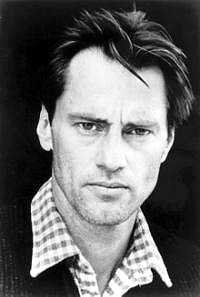
November 5, 1943, marks the birthday of enigmatic actor and playwright Sam Shepard. Born Samuel Shepard Rogers VII in Fort Sheridan, Illinois, he was the son of an Air Force career man who had been a bomber pilot in World War II. After the war, Rogers moved his family around between various army bases until he decided to retire and try his hand at ranching. The family raised sheep and grew avocados on their property in Duarte, California, where Shepard watched his father's slow, methodical decline into alcoholism.
Shepard entered San Antonio Junior College, where he intended to study agriculture. But fate intervened when, a year later, he joined a touring troupe of Nomadic thespians. "That was one of the most exciting times of my life..." he said. "We never spent more than one or two nights in the same place, and our stages were always the altars of churches... We crisscrossed New England, up into Maine and Vermont. The country amazed me, having come from a place that was brown and hot and covered with Taco stands. Finally we hit New York City and I couldn't believe it. I'd always thought of the 'big city' as Pasadena and the Rose Parade. I was mesmerized by this place."
He was mesmerized, as well, by the stage. At the age of 19, he supported himself by serving tables at the Village Gate while pursuing his theatrical interests. His first complete play, the autobiographical Cowboys, received a favorable review in The Village Voice. The bug had bitten. Hard.
Shepard gradually built his theatrical reputation upon a series of one act-plays produced in off-off-Broadway theatres. He worked at experimental spots like La Mama, Cafe Cino, the Open Theatre, the American Place Theatre, or any company he could find that would produce his work. He shared an apartment with the son of jazz legend Charles Mingus, who once remarked that, whenever Shepard wasn't reading Samuel Beckett or working, he would go into his room with a ream of paper, close the door, and emerge some time later with the same box of paper, holding a new play.
In 1971, Shepard told an interviewer, "I don't want to be a playwright, I want to be a rock and roll star..." Regardless, by the time he turned thirty, he had more than 30 New York productions to his credit.
Shepard's early plays were innovative, influenced by early experiments as a rock musician. His settings are often a type of No Man's Land on the American horizon, his characters, typically loners and drifters caught between a mythical past and the technological present. His works often explore the relationships within deeply troubled families. In 1979, his Buried Child, dealing with the deterioration of the traditional American family, won the Pulitzer Prize.
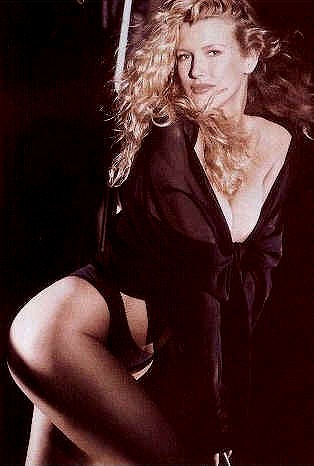
In 1983, Shepard divorced his wife and began a relationship with actress-producer Jessica Lange. Two years later, he adapted his play, Fool for Love, into a script and starred in the film with Kim Basinger and Randy Quaid. Shepard's A Lie of the Mind (1986), a poetic look at the American West, won the New York Drama Critics Circle Award. That same year, he was elected to the American Academy of Arts and Letters. Among his works from the 1990s are Simpatico (1994), which he started to write while he was driving to Los Angeles, and Cruising Paradise (1996), which contains 40 short stories exploring the themes of solitude and loss of angry and anguished men.
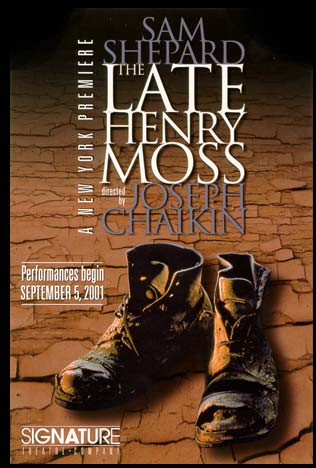
After a hiatus of 20 years, Shepard directed his play, The Late Henry Moss (2000) in San Francisco at the Magic Theatre. It starred Nick Nolte, Sean Penn, and James Gammon. The play is about the conflict between two brothers and their dead father. Since then, Shepard has gone on to become the most widely produced American playwright in history. His latest play, God of Hell, came out in 2004.
Sam Shepard said, "The work never gets easier. It gets harder and more provocative. And as it gets harder you are continually reminded there is more to accomplish. It's like digging for gold. And when you find the vein, you know there's a lot more where that came from."
Word comes from Amazon that it's looking once again at publishing writing that is shorter than conventional books. Here's the corporate press release:
Less than 10,000 words or more than 50,000: that is the choice writers have generally faced for more than a century--works either had to be short enough for a magazine article or long enough to deliver the "heft" required for book marketing and distribution. But in many cases, 10,000 to 30,000 words (roughly 30 to 90 pages) might be the perfect, natural length to lay out a single killer idea, well researched, well argued and well illustrated--whether it's a business lesson, a political point of view, a scientific argument, or a beautifully crafted essay on a current event.
Today, Amazon is announcing that it will launch "Kindle Singles"--Kindle books that are twice the length of a New Yorker feature or as much as a few chapters of a typical book. Kindle Singles will have their own section in the Kindle Store and be priced much less than a typical book. Today's announcement is a call to serious writers, thinkers, scientists, business leaders, historians, politicians and publishers to join Amazon in making such works available to readers around the world.
"Ideas and the words to deliver them should be crafted to their natural length, not to an artificial marketing length that justifies a particular price or a certain format," said Russ Grandinetti, Vice President, Kindle Content. "With Kindle Singles, we're reaching out to publishers and accomplished writers and we're excited to see what they create."
Like all Kindle content, Kindle Singles will be "Buy Once, Read Everywhere"--customers will be able to read them on Kindle, Kindle 3G, Kindle DX, iPad, iPod touch, iPhone, Mac, PC, BlackBerry, and Android-based devices. Amazon's Whispersync technology syncs your place across devices, so you can pick up where you left off. In addition, with the Kindle Worry-Free Archive, Kindle Singles will be automatically backed up online in your Kindle library on Amazon where they can be re-downloaded wirelessly for free, anytime.
To be considered for Kindle Singles, interested parties should contact digital-publications@amazon.com.


 Posts


 It's not often that a member of academia breaks out of his field to become a best-selling author, but it happened just that way for Daniel J. Boorstin. He was born in Atlanta, Georgia, on October 1, 1914. Raised in Oklahoma, he was graduated with honors from Harvard, studied at Balliol College, Oxford, as a Rhodes Scholar, and earned his PhD at Yale.
 The author's other works include The Creators, The Discoverers, and Cleopatra's Nose: Essays on the Unexpected. Boorstin has won Phi Beta Kappa's Distinguished Service to the Humanities Award and the National Book Award for Distinguished Contributions to American Letters. Daniel Joseph Boorstin died of pneumonia on Feb. 28, 2004.

 It's not often that a member of academia breaks out of his field to become a best-selling author, but it happened just that way for Daniel J. Boorstin. He was born in Atlanta, Georgia, on October 1, 1914. Raised in Oklahoma, he was graduated with honors from Harvard, studied at Balliol College, Oxford, as a Rhodes Scholar, and earned his PhD at Yale.

 Boorstin's books have been translated into over twenty languages and have won numerous awards. The Americans: The Colonial Experience, the first in a trilogy of books, won the Bancroft Prize. His follow-up, The Americans: The Democratic Experience, won the Pulitzer Prize; and his third, The Americans: The National Experience, won the Francis Parkman Prize. Boorstin is one of only a few people to have won all three awards.
 Boorstin's books have been translated into over twenty languages and have won numerous awards. The Americans: The Colonial Experience, the first in a trilogy of books, won the Bancroft Prize. His follow-up, The Americans: The Democratic Experience, won the Pulitzer Prize; and his third, The Americans: The National Experience, won the Francis Parkman Prize. Boorstin is one of only a few people to have won all three awards.
 The author's other works include The Creators, The Discoverers, and Cleopatra's Nose: Essays on the Unexpected. Boorstin has won Phi Beta Kappa's Distinguished Service to the Humanities Award and the National Book Award for Distinguished Contributions to American Letters. Daniel Joseph Boorstin died of pneumonia on Feb. 28, 2004.


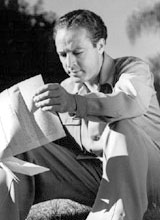


 "When you who are in your forties or younger look back with curiosity on that dark time, as I think occasionally you should, it will do no good to search for villains or heroes or saints or devils because there were none; there were only victims. Some suffered less than others, some grew and some diminished, but in the final tally we were all victims because almost without exception each of us felt compelled to say things he did not want to say, to do things that he did not want to do, to deliver and receive wounds he truly did not want to exchange. That is why none of us - right, left, or centre - emerged from that long nightmare without sin."